
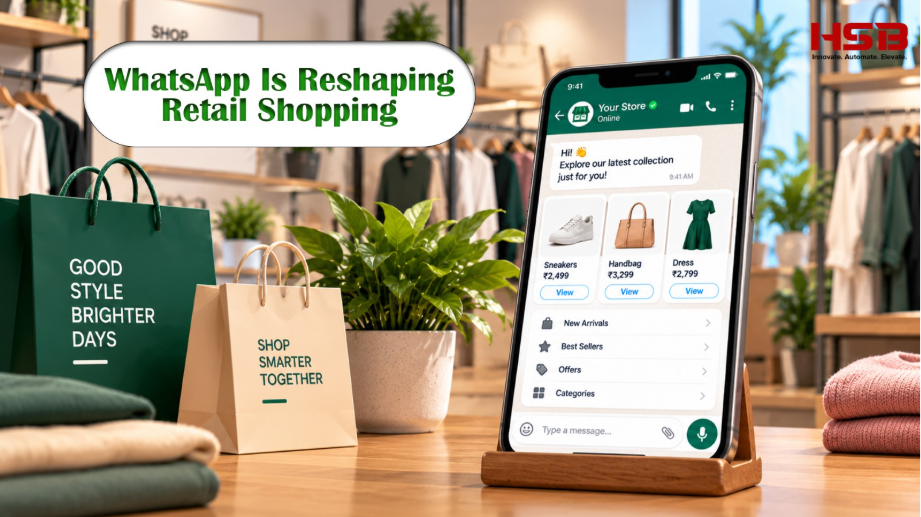
How Is WhatsApp Retail Changing the Way Customers Buy
Retail has evolved from offline stores to digital shopping, bringing products closer to customers through their mobile phones. Today, a WhatsApp retail strategy helps businesses connect these experiences by letting customers discover products, ask questions, explore offers, and stay connected all through WhatsApp.
For retailers, WhatsApp has become more than a messaging app. It is a powerful tool to attract customers, personalize interactions, and create a seamless online-to-offline shopping experience.
The Power of WhatsApp in Omnichannel Retail
WhatsApp commerce is changing the way businesses connect with customers by bringing product discovery, conversations, and purchases directly to their mobile phones.
With omnichannel marketing platforms, retailers can connect WhatsApp with websites, social media, apps, and physical stores.
This creates a consistent customer experience across every channel while keeping interactions personalized.
Together, WhatsApp commerce and omnichannel marketing help retailers reach customers, engage them, and drive sales more effectively.
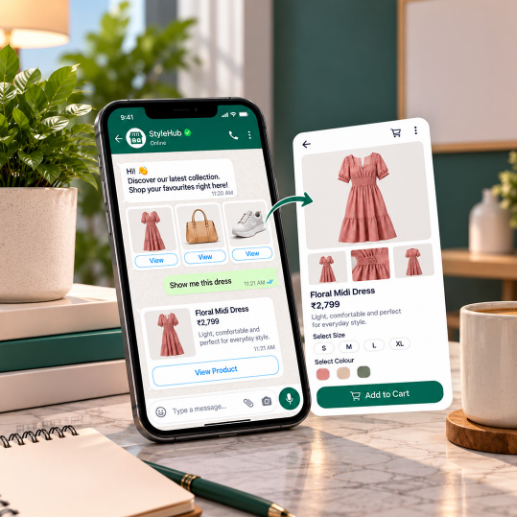
Omnichannel Distribution Strategy with WhatsApp Business for Retail
An omnichannel distribution strategy connects all the places where customers discover, compare, and purchase products such as physical stores, websites, mobile apps, social media, and messaging platforms. WhatsApp Business for retail can act as a direct communication layer, helping retailers connect these channels and guide customers smoothly from product discovery to purchase.
Key Strategies
- Connect Online and Offline Stores: Use WhatsApp to share product information, store locations, availability, and offers, allowing customers to move easily between online browsing and physical shopping.
- Create Personalized Conversations: Recommend products based on customer interests, previous interactions, or enquiries instead of sending the same message to everyone.
- Turn Product Discovery into Action: Share product images, descriptions, prices, offers, and relevant links through WhatsApp so customers can explore products directly from their phones.
- Enable Click to WhatsApp Marketing: Connect advertisements and social media campaigns to WhatsApp so interested customers can start a conversation instantly.
- Support Click and Collect: Customers can discover products online, confirm availability through WhatsApp, place an order, and collect it from a nearby store.
- Provide Real Time Customer Support: Use WhatsApp to answer product questions, provide order updates, handle enquiries, and assist customers after purchase.
- Reconnect with Customers: Send relevant updates about new products, promotions, restocks, or personalized offers to keep customers engaged.
- Maintain a Consistent Experience: Ensure that product information, pricing, promotions, and customer service remain consistent across WhatsApp, websites, apps, and physical stores.
How It Works
Imagine a customer sees a product on Instagram and becomes interested. They click through to WhatsApp Business, where they can ask about the product, check its price, size, availability, and offers. The retailer can quickly respond and guide the customer based on their needs.
The customer can then choose to buy the product online or visit the nearest physical store to see it before purchasing. If they place an order, WhatsApp can be used to share confirmation, delivery or pickup updates, and customer support.
This creates a smooth journey where Instagram attracts the customer, WhatsApp builds the conversation, the website or store completes the purchase, and WhatsApp continues the relationship after the sale.
Omnichannel Retail Strategy for Customer Engagement
- An omnichannel retail strategy connects social media, websites, mobile apps, WhatsApp, and physical stores to create a seamless customer experience.
- It helps retailers reach customers wherever they prefer to shop, making product discovery and communication more convenient.
- WhatsApp customer engagement adds a personal touch by allowing customers to ask questions, receive recommendations, and get quick support.
- Consistent offers, product information, and service across channels help build customer trust and encourage purchases.
- A connected experience keeps customers engaged even after the purchase, encouraging them to return and interact with the brand again.
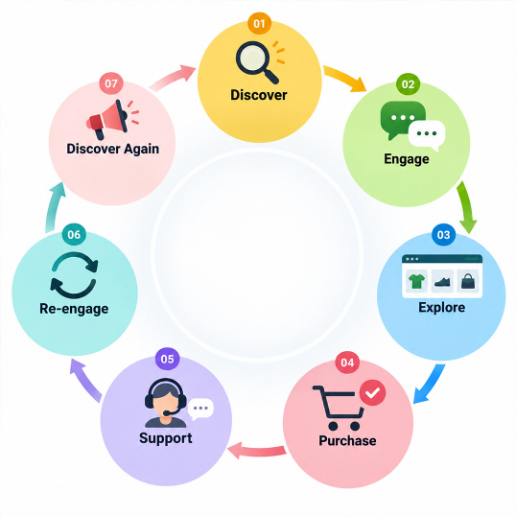
WhatsApp Automation for Retail: Turning Messages into Customer Journeys
Instead of using WhatsApp only to answer customer questions, retailers can use it to automate the entire communication journey from the moment a customer shows interest in a product to after-sales engagement.
- A customer sees a product through Instagram, Facebook, Google, a website, or an in-store QR code and connects with the business on WhatsApp.
- WhatsApp automation can immediately respond with product information, images, pricing, sizes, colours, availability, and offers.
- If the customer is interested, automated replies can guide them toward placing an order, visiting a store, booking a product, or speaking with a sales representative.
- Once the purchase is completed, the customer can automatically receive confirmation, invoice details, delivery updates, and pickup notifications.
- After delivery, businesses can continue the conversation by requesting feedback, sharing care instructions, or recommending related products.
- Based on customer interactions, retailers can send relevant promotions and product recommendations instead of sending the same message to every customer.
- For businesses, automation reduces repetitive work, improves response time, supports customers at scale, and creates more opportunities for sales, repeat purchases, and customer retention.
The bigger advantage is that WhatsApp becomes a bridge between marketing, sales, customer service, and retention, allowing retailers to maintain one continuous conversation with the customer.
WhatsApp Marketing vs Traditional Offline Store Marketing
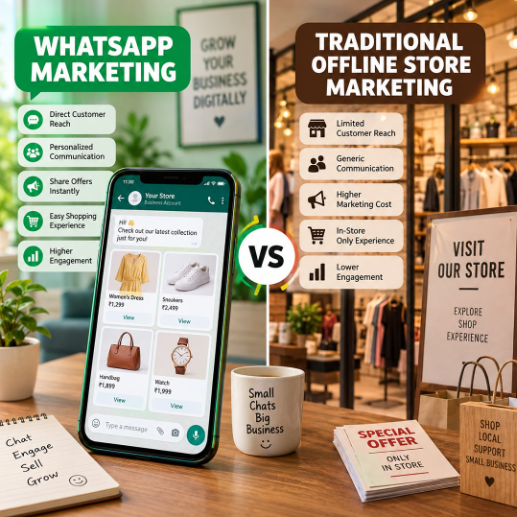
| WhatsApp Marketing | Traditional Offline Store Marketing |
| Reaches customers instantly. | Depends on store visits. |
| Sends targeted offers. | Uses common promotions. |
| Customers can engage anytime. | Engagement is time limited. |
| Measures clicks and responses. | The results are less measurable. |
The Retail Customer Journey Is No Longer Just Offline
Today’s shoppers are moving between social media, WhatsApp, websites, and physical stores before making a purchase. The numbers show how quickly this shift is happening:
- 50%+ of retail consumers research products online before buying them in-store, while 50%+ also research in-store before purchasing online.
- 64% of Indian shoppers now complete purchases across two or more channels for a single need.
- 72% of product discovery now happens on WhatsApp, showing its growing role in retail conversations and shopping journeys.
- Nearly 60% of Indian users are likely to purchase after seeing an offer on WhatsApp.
- Omnichannel shoppers can spend 2.5× more than single-channel shoppers, highlighting the value of connecting online and offline experiences.
Conclusion
Retail is no longer about choosing between online and offline it’s about creating one connected customer experience across every channel. At HSB Infotech, we help businesses build powerful omnichannel marketing strategies that connect WhatsApp, social media, websites, physical stores, and other customer touchpoints seamlessly.
From personalized marketing and WhatsApp commerce to automation and customer support, our solutions help you engage customers at the right time, on the right channel. With HSB Infotech, connect every touchpoint, strengthen customer relationships, and boost your business growth.