

How AI Automation Can Reduce Business Costs and Improve Operational Efficiency
Every business is looking for smarter ways to reduce workload, simplify processes, and get more done with less effort. As repetitive tasks continue to consume valuable time, businesses are increasingly turning to AI Automation to make everyday work faster, simpler, and more efficient.
AI Automation helps businesses automate repetitive and time-consuming tasks, streamline workflows, reduce manual errors, and improve overall operational efficiency. From customer support and data management to marketing, finance, and internal operations, AI Automation can transform complex processes into simpler, automated workflows, allowing employees to focus on more important and strategic work.
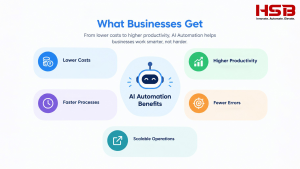
AI Automation Benefits
What More Can Businesses Get?
- Save Time on Repetitive Work
Automate routine tasks that take hours every day, allowing teams to focus on higher-value activities.
- Reduce Business Expenses
Minimize the cost of manual processes by automating tasks that require significant time and resources.
- Boost Team Productivity
Give employees smarter tools to complete their work faster, without being stuck with repetitive processes.
- Improve Accuracy & Consistency
AI Automation helps reduce human errors and ensures repetitive tasks are completed consistently.
- Faster Decision-Making
AI-powered systems can process data quickly and provide useful insights to help businesses make faster decisions.
- Better Customer Experience
Automate customer queries, follow-ups, recommendations, and support processes to provide faster responses.
- Work 24/7
Automated workflows can continue handling tasks beyond regular working hours without constant human intervention.
- Streamline Business Workflows
Connect different tasks, tools, and departments into smoother automated workflows with fewer manual handoffs.
- Handle More Work with Less Effort
As business demand grows, AI Automation can help manage increasing workloads without adding the same amount of manual work.
- Focus on Business Growth
When routine work is automated, teams can spend more time on innovation, strategy, customers, and opportunities that drive growth.
Business Automation Solutions- What Businesses Are Using Today?
- AI Customer Support Automation
AI chatbots and virtual agents can answer common customer questions, create support tickets, route queries, and provide instant responses.
- Sales & Lead Automation
Automatically capture leads, qualify prospects, send follow-ups, schedule meetings, and notify sales teams when a lead is ready.
- Marketing Automation
Businesses are automating email campaigns, customer segmentation, content creation, social media workflows, and personalised marketing communications.
- Finance & Accounting Automation
Automate invoice processing, expense checking, payment reminders, financial reporting, reconciliation, and data entry. AI is increasingly being integrated into finance workflows for tasks such as invoice processing and forecasting.
- HR & Employee Automation
Automate employee onboarding, document collection, HR queries, interview scheduling, leave requests, and employee self-service.
- WhatsApp & Communication Automation
Businesses can automate customer conversations, enquiries, reminders, appointment booking, order updates, and follow-ups through messaging channels.
- Data & Reporting Automation
Automatically collect data from different systems, generate reports, identify trends, and provide dashboards so managers don’t have to prepare everything manually.
- Inventory & Operations Automation
Businesses can automate inventory alerts, demand forecasting, purchase notifications, order processing, and supply-chain workflows.
- IT & Internal Process Automation
Automate password requests, employee access, IT tickets, system monitoring, incident classification, and routine technical tasks.
- AI-Powered Business Analytics
AI can analyze business data and highlight trends, unusual activity, opportunities, and potential problems to support faster decisions.
Beyond the Buzzwords
Understand AI Automation & How It Actually Works
Learn the key terminology behind AI Automation, Intelligent Automation, and ROI and see how these technologies work together to simplify real business processes.
Intelligent Automation vs AI Automation
| Aspect | Intelligent Automation | AI Automation ROI |
| Focus | Automates and improve complete business workflows. | Measures the value generated by AI automation. |
| What It Does | Connects AI, data, workflows, and automation to complete processes efficiently. | Determines whether an automation investment is delivering measurable business value. |
| Business Goal | Make complex operations smarter, faster, and more efficient. | Reduce costs and demonstrate measurable returns from automation. |
| What It Measures | Speed, accuracy, automation level, and workflow efficiency. | Cost savings, time saved, revenue impact, error reduction, and payback period. |
| Best For | Complex processes involving multiple systems, tasks, and decisions. | Evaluating whether an AI automation project is financially worthwhile. |
| Example | AI reads an invoice, extracts data, validates details, routes it for approval, and updates the finance system. | Compare manual processing costs with automated processing costs to calculate savings and ROI. |
From Manual Processes to AI-Powered Efficiency
Explore how Business Automation, Business Process Automation Solutions, and AI can transform everyday operations into faster, smarter, and more efficient workflows.
- Business Automation
Business Automation helps organizations reduce manual work by using technology to automate repetitive and time-consuming business activities.
- Automates routine tasks and workflows.
- Reduces manual effort and operational costs.
- Business Process Automation Solutions
Business Process Automation Solutions transform manual processes into structured, automated workflows that help businesses operate faster and more efficiently.
- Automate customer and employee workflows.
- Integrate CRM, ERP, and other business systems.
- Reduce delays, errors, and unnecessary manual steps.
- AI for Operational Efficiency
AI for Operational Efficiency enables businesses to use AI to analyze information, automate decisions, and improve everyday operations.
- Supports faster and smarter decision-making.
- Improves resource and workforce utilization.
- Helps teams complete more work with less effort.
- AI Operational Efficiency
AI Operational Efficiency focuses on using AI-powered automation to make business operations faster, smarter, and more scalable.
- Smarter Workflows: Connect multiple tasks into automated processes
- Scalable Growth: Handle increasing workloads without the same increase in manual effort for this make catchy subtitle
AI Automation by the Numbers
- $2.6T–$4.4T
Potential Value
Potential annual economic value of generative AI across 63 use cases.
 High-Impact Areas
Approximate share of GenAI’s potential value concentrated in customer operations, marketing & sales, software engineering, and R&D.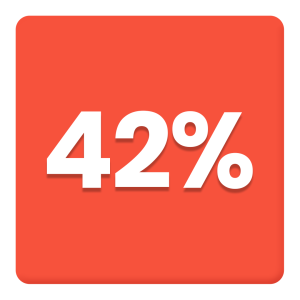
Time Saved
Of surveyed GenAI users reported saving 10+ hours per week.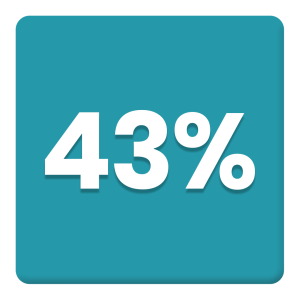
Productivity Boost
Reported greater productivity or faster task completion using GenAI and business automation.

Better Accuracy
Reported more accurate work when using GenAI and business automation together.
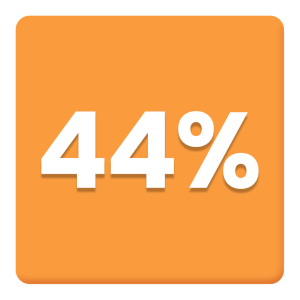
Cost Savings
Of respondents reported cost savings from AI adoption.

AI Agents Scaling
Of respondents from large organizations reported scaling AI agents.
Conclusion
AI Automation is changing how businesses approach everyday work by turning repetitive, time-consuming processes into intelligent and efficient workflows. From customer support and sales to finance, HR, reporting, and operations, businesses can automate tasks while improving speed, accuracy, and productivity.
The real value of AI Automation goes beyond simply reducing manual work; it helps teams focus on strategic decisions, customer relationships, innovation, and growth. As automation continues to evolve, businesses that embrace intelligent workflows can reduce operational costs, improve efficiency, and create a more productive way of working.
Recommended references for the article