
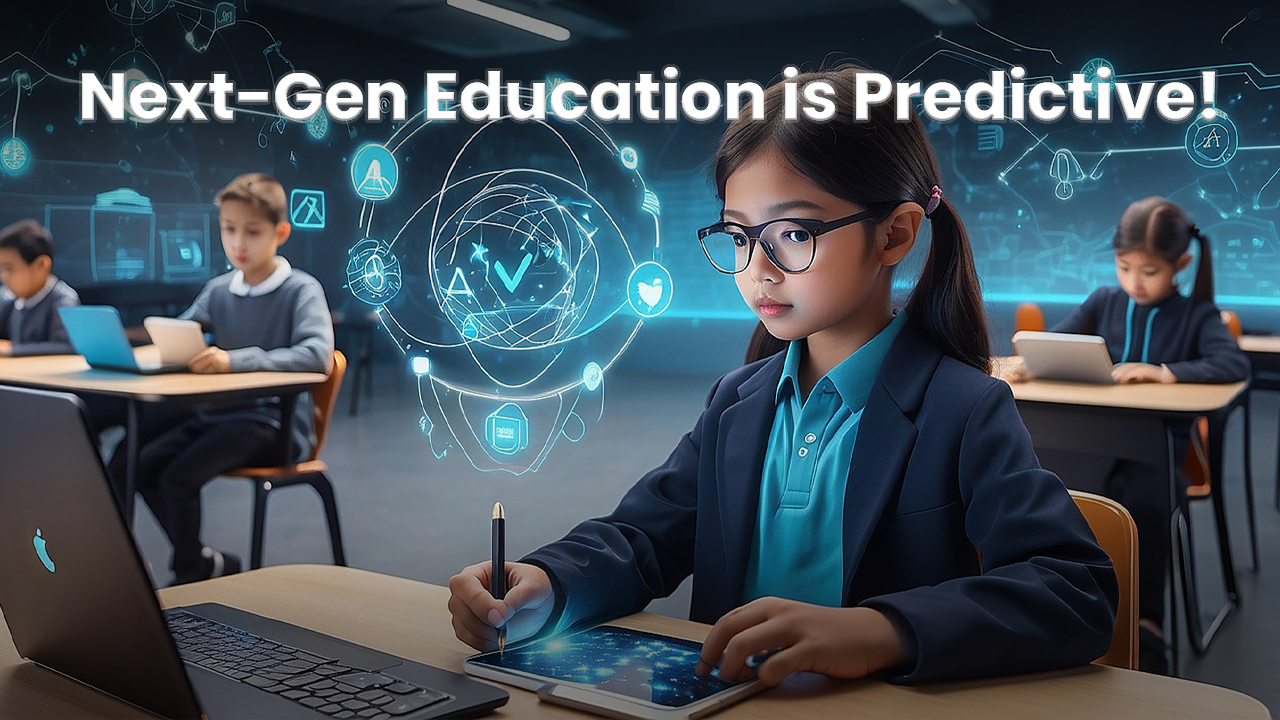
The Next Wave in Education Technology: Predictive Learning Through AI Analysis
- HSB Infotech
- April 9, 2026
- No Comments
These days, the digital world is not just moving forward, it is moving really fast and changing how we learn, think and respond. At the heart of this change is a new approach to learning that transcends traditional methods and moves towards a more personalised and intuitive experience. This new way of Predictive Learning in Edutech, is not an update; it is a whole new way of thinking. It replaces learning that happens after something goes wrong with learning that happens before.
Where old systems used to wait for results to show what was going wrong, today’s technology tries to find the problems before they happen. Predictive Learning in Edutech through AI analysis brings together data, patterns and decision-making. It uses patterns, machine learning and data to create a system that’s smart and also cares about the students.
From Reaction To Anticipation
Old education systems react to problems. A student fails a test. Then they get help Predictive Learning changes this. Waiting for a student to fail AI analysis looks at patterns like attendance, how engaged a student is, how long it takes them to respond and how well they are doing to figure out where a student might struggle before it happens. This is not about replacing teachers, it is about giving them information to help their students.
The Core
At first, AI analysis might seem like numbers and computers. When used in a good way, it is actually very human. Because behind every piece of data is a story: A student who is having trouble focusing because of things going on outside of school, a learner who understands the concepts but lacks confidence Someone who learns differently but was never noticed.
AI Learning does not just track how well a student is doing, but also shows patterns of behaviour and what they need. And that is where your ideas about education come alive as a person.
The Following are ways of predictive analysis
●Pattern Recognition: Here predictive analysis finds patterns and behaviours in a student’s learning journey. It looks at how students respond to situations, where they get stuck and where they do well.
● Forecasting: It goes beyond just watching what happens by always predicting what will happen next in a student’s learning. It looks at real-time data to figure out how a student will do and what challenges they might face.
● Data-driven Decision Making: Data-driven decision-making focuses on making decisions based on data instead of just guessing. It uses analysis to guide teaching strategies adjust the curriculum and support students. This way decisions are fairer and more effective. It helps both teachers and learners know what to do.
● Dynamic Methods of Learning: Dynamic learning methods change according to the learner’s pace, style and progress. of just giving out the same information the system changes with the students’ needs. It creates an environment where learning is always adjusted. This digital transformation in education makes more interesting and personal.
● Learning about finance through the Predictive Analysis Approach for Stocks: Analysis in finance learning helps students understand stock trends through data patterns and forecasting models. It helps learners analyse market behaviour, find opportunities for growth and make decisions. This way of learning connects what they learn in school to world financial skills. It prepares learners to work with financial systems.
● Deployment and Monitoring: Deployment means putting AI-driven learning systems into educational environments. Monitoring makes sure these systems keep track of performance, engagement and outcomes. It is not a one-time setup but a continuous process of watching and improving. This helps keep learning predictions relevant.
A Shift in the Role of Educators: With Predictive Learning in Edutech, the role of teachers changes. By spending time finding problems, teachers can focus on solving them in a meaningful way.
They move from: Watching what happens → Guiding students
Evaluating students → Helping them
This change helps teachers connect more with students and provide support when it is needed.
Ethics, Empathy and Balance
Even though Predictive Learning has a lot of potential, it also raises concerns. Questions about keeping data private, relying much on technology and reducing students to just data must be thought about carefully.
Education must always come first. AI should help with decisions, not make them. It should help us understand, not replace our judgment. The balance is in combining technology with empathy.
The Future: Quietly Transformative
The next big thing in edutech solutions are not loud or obvious. It works quietly in the background, analysing, predicting and adapting. Its impact is huge. It can create a system that’s more responsive, more inclusive, and more aligned with individual learning needs. This change may not always be visible. It will definitely be felt.